What Is Payment Processing? Meaning, Steps & Security
Payment processing meaning, steps, components, and security best practices.

Introduction to payment processing
Payment processing is the paying process that securely moves funds from a payer to a payee. It is the sequence of actions that turns a checkout click into a confirmed transfer. If you ask, what is payment process, the short answer is this full workflow.
Many people also mean payment process means when they ask how money moves behind the scenes. The process for payment covers initiation, authorization, settlement, and reconciliation. Those stages show up across cards, ACH, and most electronic flows.
To make the process payment definition practical, treat each stage as a distinct checkpoint. Initiation gathers payment data. Authorization decides approve or decline. Settlement moves funds. Reconciliation links the result to your books.

Key components of a payment process system
A solid payment process system is built from roles and tools that pass results to each other. If one role stalls, the whole payment can feel “stuck.” That is why teams map every handoff from checkout to bank posting.
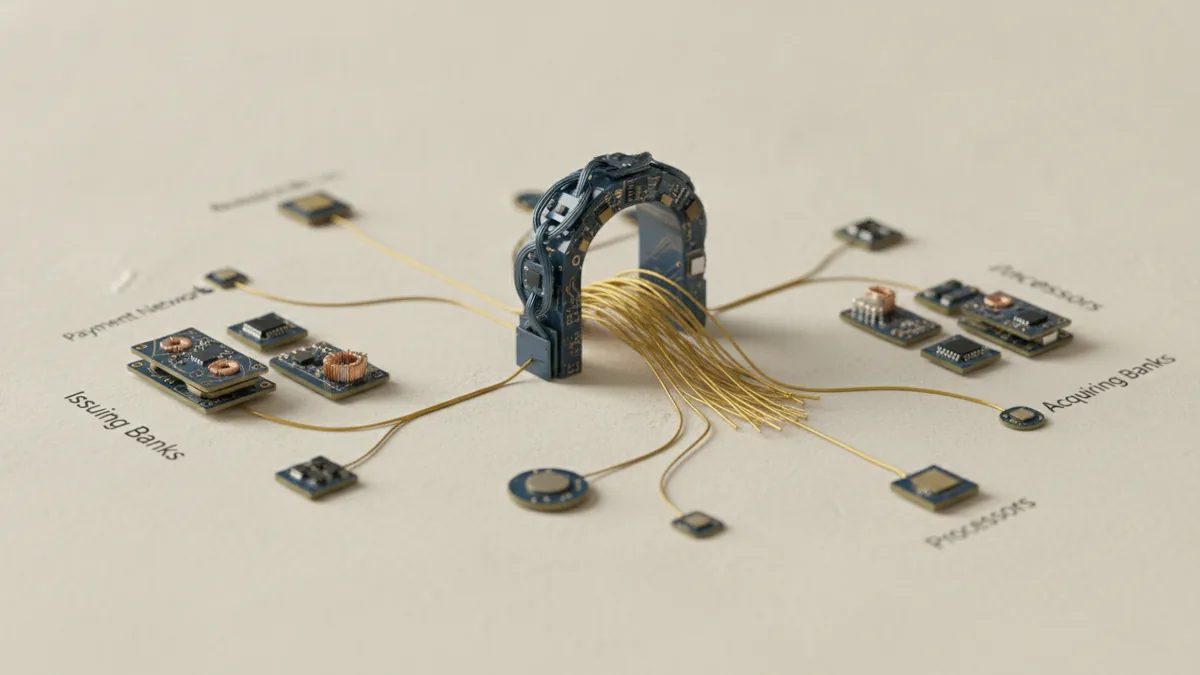
Here are the key components in most setups, including bank and card flows:
- Customers who pay with card, wallet, or bank methods
- Merchants who sell goods or services and receive funds
- Payment methods like credit card payments and mobile payments
- Point-of-sale systems for store checkout or in-app payment
- Payment gateways that move payment data safely
- Payment processors that route requests to the right destination
- Acquiring banks that connect to the merchant and support routing
- Issuing banks that hold the buyer account and approve
- Card networks that carry approval and posting signals
- Merchant accounts that hold funds during the payment lifecycle
In a banking payment process, an ACH path may replace card rails. That is where an account payment process matters. It includes how you collect routing and account details and how you handle posting timing.
Step-by-step: how the payment process works
The process the payment meaning becomes clear when you walk through the workflow. Most payments use a shared model: transaction initiation, authorization, settlement, and reconciliation. You can map your dashboard statuses to these stages.
Below is a practical process for payment view that fits cards and ACH:
- Transaction initiation starts when a buyer confirms checkout. Your checkout sends the payment request through a payment gateway.
- Authorization checks whether the payment can be approved. The request flows via the acquiring bank and reaches the issuing bank.
- Settlement posts the real funds move. Timing can vary by network rules and by capture timing.
- Reconciliation matches payment results to orders and invoices. Your team also tracks transaction fees, refunds, and disputes.
This is where payment in process meaning usually comes from. A “pending” status often means the payment is authorized but not fully settled. For some flows, it means it is queued for a posting date.
To avoid confusion, use consistent language across your stack. For example, define what your team means by “in process,” and tie it to an exact stage.

Payment process in practice: cards vs ACH
When people search payment process example, they often want to know what changes by payment type. Cards usually involve authorization and then capture before settlement. ACH often uses a bank account workflow with different timing rules.
Here is a simple comparison for the ach payment process versus card payments:
| Stage | Credit card payments | ACH payment process |
|---|---|---|
| Initiation | Checkout submits card token or details | Checkout collects routing and account |
| Authorization | Issuing bank approves or declines | Account checks may happen before posting |
| Settlement | Funds move after capture and batching | Posting follows ACH timing and batching rules |
| Reconciliation | Match payments, then apply fees | Match postings, then confirm account totals |
If you are working on payment process in business, these differences affect support tickets. A customer may see “approved” on day one, then see final settlement later. Clear status mapping reduces repeat retries and charge-related questions.
You may also see electronic payment system process wording in docs. For most merchants, that is still the same initiation, authorization, settlement, and reconciliation model. The rails change, but the stages stay recognizable.
The importance of payment processing for cash flow and trust
Payment processing matters because it shapes cash flow and support load. It also affects how customers judge your checkout. Fast, clear outcomes reduce churn and keep buyers from retrying.
Cash flow depends on timing between authorization and settlement. Authorization can look like success while funds are not yet available. That is why a team forecast should not treat “approved” as “settled cash.”
Customer trust depends on outcome clarity. If declines show vague messages, buyers often try again and may trigger extra checks. If you explain the right fix, conversion and repeat buys usually improve.
In bank-heavy models, the account payment process timing can be even more visible. Customers notice when transfers take days. Good updates and correct expectations cut down chargebacks and “where is my payment” messages.
Best practices for efficient payment processing
To improve the process of payment, focus on flow quality and operational clarity. The easiest wins come from reducing friction and handling failures in a user-friendly way.
Use these best practices for a smoother process payment experience:
- Offer multiple payment options so buyers can choose a method they trust
- Use clear status labels that match initiation, authorization, and settlement
- Design for retries with idempotency to prevent duplicate charges
- Monitor transaction fees so you can control margins per payment method
- Update your payment stack regularly to reduce risk from old integrations
For teams running an electronic checkout, “speed” is more than UI. It also means fast gateway responses and stable routing by the payment processor. You should test end-to-end paths for card and for the ach payment process you use.
If you want the process payment definition in operational terms, it is your control of this lifecycle. You plan for each stage and you handle exceptions with clear rules.
Security considerations in payment processing
A secure payment process must protect sensitive payment data and limit fraud risk. This is where secure payment process stops being a slogan and becomes a set of controls. The goal is simple: reduce exposure during each hop in the payment workflow.
Core security steps usually include:
- PCI DSS compliance to meet card data handling rules
- Encryption for data in transit between checkout and payment services
- Tokenization so your systems store tokens, not raw card data
- Access controls so only needed systems can call payment APIs
- Fraud checks that review signals before authorization completes
You may also need stronger rules for bank transfers and online forms. Verify account ownership where required, and log every action in the payment process system. That audit trail helps with disputes and support investigations.
For a standard view of payment data rules, see PCI Security Standards Council guidance. It is the main source for current PCI DSS expectations.
Conclusion and future trends
Payment processing is an evolving set of workflows, not a one-time integration. New payment methods and better risk tools keep changing how the paying process works. Still, the stage model stays useful for explaining what is the payment process.
In the coming years, expect more automation in risk checks and more routing choices by processors. Regulatory changes may also shift data rules and reporting timelines. Teams that keep their status mapping accurate will face fewer “payment is in process” complaints.
If you want to teach the team the process for payment simply, start with the four stages. Then connect each stage to real statuses and real actions. That is the most practical way to make payment processing meaning clear.
Quick answers: common meaning questions
What does process payment mean? It means running the full payment lifecycle from initiation to reconciliation. It is the same idea as payment processing, just phrased as an action.
What is payment process? It is the workflow that securely moves funds between payer and payee. It includes transaction initiation, authorization, settlement, and reconciliation.
What does process payment definition look like? It is the sequence of actions that decides approval and then posts funds. In other words, it is the operational lifecycle.
What is payment in process meaning? It usually means the payment is not fully settled yet. It may be authorized but waiting, or queued for a later posting date.
What does process a payment meaning mean? It is the step-by-step workflow that turns a payment request into an accounting result. Your team should map it to your statuses and logs.
| Phrase | Plain meaning |
|---|---|
| payment processing | The full paying process from checkout to reconciliation |
| process for payment | The lifecycle stages: initiation, authorization, settlement, reconciliation |
| payment in process meaning | Pending status before final settled posting |
| account payment process | Bank account workflow, often used for ACH and similar rails |
| ach payment process | Bank transfer workflow with ACH timing rules |
Frequently asked questions
- What is payment process?
- Payment process is the workflow that securely moves funds from payer to payee. It includes initiation, authorization, settlement, and reconciliation.
- What does process payment mean?
- It means running the full payment lifecycle from request to final accounting match. This is the same idea as payment processing.
- What is payment in process meaning?
- It usually means the payment is not fully settled yet. It may be authorized but waiting, or queued for a later posting date.
- What does process payment definition include?
- It includes the sequence of actions that decides approval and then posts funds. The definition maps to the stages in your payment dashboards.
- What is an ACH payment process?
- It is the bank account workflow used for ACH transfers. It follows different timing and posting rules than card payments.
- What security steps are crucial in payment processing?
- PCI DSS compliance, encryption, and tokenization are key. They reduce risk when payment data moves through your system.
Related reading

What Is Flutterwave? How Its Payment Tools Work
Learn how Flutterwave helps businesses take and manage digital payments.
What Is Credit Card 3D Secure?
See how 3D Secure verifies cardholders and can protect online payments.
What Is a Payment Flow? How Card Payments Move
See how card payments move from checkout to approval, and what makes a flow work well.