SEPA Explained: Meaning, Types, and How to Make Payments
SEPA meaning, payment types, and how to make a SEPA transfer in euros.

What is SEPA?
SEPA stands for the Single Euro Payments Area. It is the system that lets people and businesses send euro payments across Europe with rules similar to domestic payments.
So, what is SEPA in practical terms? It is a way to make cashless bank transfers in euros move across borders using common standards.
The sepa meaning also includes a key outcome: cross-border euro payments can be as easy for customers as local transfers. That is the main reason SEPA matters in banking.
If you are searching what is a SEPA payment, think “a euro payment that follows SEPA rules”. Those rules cover how you send money and how costs are handled.
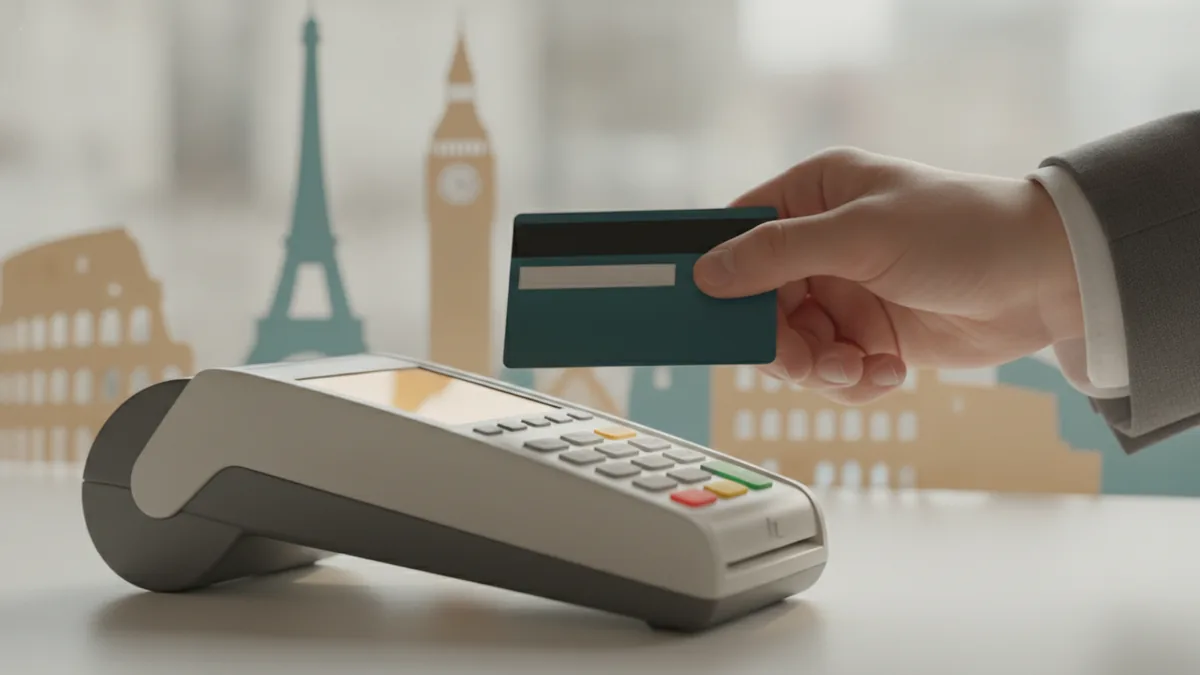
Understanding SEPA payments in banking
A SEPA payment is processed through banks that participate in the SEPA framework. When you send a payment, your bank passes it to the payment rails used for SEPA transactions.
For customers, the important part is consistent treatment of charges. SEPA rules require that euro payment fees are the same for domestic and cross-border payments within the participating countries.
This affects both individuals and companies. You can invoice clients in other countries and expect predictable processing and pricing, instead of treating each border as a new payment method.
SEPA also pushes market competition. By making euro payments interoperable, it becomes easier for customers to use more than one bank or payment service provider.
- Currency focus: euro payments, not multi-currency transfers.
- Common experience: send like a domestic bank transfer.
- Cost parity: fees should match domestic vs cross-border within SEPA.
- Clear rails: standardized formats for banks to route payments.
SEPA payment instruments you can use
SEPA is not one single “button”. It includes different SEPA payment method options for different use cases. The main instruments are designed for one-off payments and for scheduled or recurring billing.
Here are the three core SEPA instruments most people encounter. Each one has its own timing and use pattern.
| SEPA instrument | Typical use | What to expect |
|---|---|---|
| SEPA Credit Transfer | Paying an invoice or making a one-off transfer | Bank-to-bank transfer in euros |
| SEPA Instant Credit Transfer | Urgent payments where faster availability helps | Designed for near real-time movement |
| SEPA Direct Debit | Subscriptions and recurring payments | Payers authorize collection instead of sending each payment |
When you are choosing between them, match the instrument to the intent. A one-time payment usually fits SEPA Credit Transfer. Billing that repeats monthly often fits SEPA Direct Debit.
For SEPA Instant Credit Transfer, the trade-off is speed. You still need correct beneficiary details, and banks may apply eligibility rules.

How to make a SEPA payment (step by step)
If you are looking for how to make a SEPA payment, the process comes down to three things. You need the right beneficiary details, the right SEPA instrument, and correct payment fields.
Most payment errors come from missing data or mismatched formats. Fixing that before you submit usually saves days of back-and-forth.
- Confirm it is a euro SEPA transfer.
Check the payment screen and make sure you are sending euros, not a different currency. - Choose the right SEPA instrument.
Use SEPA Credit Transfer for normal timing, or SEPA Instant Credit Transfer when speed is needed. - Collect beneficiary details.
You typically need the beneficiary bank information and an identifier used for SEPA routing. - Enter the amount and reference.
Add an invoice reference if your counterpart needs to match the payment. - Review fees and submit.
SEPA rules aim for consistent charges across borders, but your payment provider can still show the exact fee. - Track the transfer status.
After submission, you will usually see a pending state, then a completed state.
Now, for timing. How long does SEPA payment take? For standard SEPA Credit Transfer, it commonly takes up to a few business days, depending on the banks involved and the cut-off time. SEPA Instant Credit Transfer is built for faster availability, often within minutes.
For recipients, availability can depend on their bank’s posting process. That is why “sent” and “available to use” are not always the same moment.
One more detail: fee and status wording varies by bank. If you see statuses like “pending”, it is often about the payment lifecycle inside the provider and the next bank hop.
People also ask how much is a SEPA payment. The amount is simply what you send, plus any provider fees. Under SEPA rules, cross-border transaction charges are expected to be aligned with domestic charges within the SEPA zone.

Benefits of SEPA for banking and payments
SEPA was created to make euro payments more efficient and predictable. Before SEPA, many cross-border bank transfers relied on different processes and cost structures.
Today, the biggest customer benefit is usability. You can make cross-border payments in euros using a familiar bank transfer flow.
SEPA also improves competitiveness in the European banking sector. When payment standards are shared, it is easier for customers to switch banks or add another provider.
For businesses, SEPA supports stronger operational planning. Invoices can be issued across the SEPA zone without redesigning payment instructions for each country.
- Better predictability: more consistent fee treatment for euro transfers.
- Fewer payment instruction changes: shared euro payment standards.
- Supports growth: easier payments for cross-border trade within Europe.
- Standard routing: banks can process payments using common formats.
Countries in the SEPA zone
The SEPA zone is the set of countries where SEPA rules apply for euro transactions. It includes both EU and non-EU states.
As of 2025, 41 countries are part of the SEPA scheme. This includes places such as Switzerland and the UK, not just EU members.
For anyone sending money, this matters because it determines whether a transfer can be treated as a SEPA transaction. If the beneficiary country is outside the SEPA scheme, your payment may fall back to a different cross-border process.
In practice, you can often tell from the payment form options. If the form offers SEPA transfer types and euro routing, the beneficiary is likely in the SEPA zone.
Future of SEPA payments
SEPA continues to evolve, with a focus on speed and broader integration. Faster credit transfers reduce waiting time for both payers and recipients.
Instant transfers are a major direction. They support time-sensitive payments such as supplier payments and settlement for short-term needs.
Another trend is deeper payment integration. Banks and payment service providers keep improving how they connect to SEPA payment rails, which helps reduce errors and delays.
Finally, regulators and industry groups keep working on standardization and customer protection. That helps ensure the system stays reliable as payment volumes and customer expectations grow.
If you are building payment flows, it helps to design for SEPA inputs from the start. Clear instructions, correct beneficiary identifiers, and proper handling of pending states will make your banking workflow smoother.
| What to watch | Why it matters |
|---|---|
| More instant availability | Less waiting for funds to become usable |
| Better validation tools | Fewer failed or returned transfers |
| Ongoing rule updates | Cost and timing expectations remain clear |
Frequently asked questions
- What is SEPA meaning in banking?
- SEPA meaning is the Single Euro Payments Area. It is a system that standardizes euro payments across SEPA countries through shared banking rules.
- What is a SEPA payment and what does it cover?
- A SEPA payment is a cashless euro transfer processed under SEPA standards. It covers common credit transfers and direct debit collections within the SEPA zone.
- How long does a SEPA payment take?
- A standard SEPA Credit Transfer often takes up to a few business days. SEPA Instant Credit Transfer is designed to move funds within minutes.
- How much is a SEPA payment?
- The payment amount is what you send, plus any provider fees. SEPA rules expect domestic and cross-border euro fees to be aligned within the SEPA zone.
- What are the types of SEPA payment methods?
- The main types are SEPA Credit Transfer, SEPA Instant Credit Transfer, and SEPA Direct Debit. Choose based on whether you need a one-off transfer or a recurring collection.
- How do I make a SEPA payment successfully?
- Use the correct euro option and choose the right SEPA instrument. Double-check beneficiary details and references before you submit.
Related reading
What Is Verified by Visa, and Is It Safe?
See how Verified by Visa protects online payments and what setup involves.
Unable to Process a Payment? Fix Common Errors
Fix failed payments by checking your card, bank, billing details, and error code.
How Do Credit Cards Work? Payments, Costs and Uses
Learn how credit limits, payments, interest, and card rewards fit together.